Zoey Chen
I am a roboticist and AI researcher building the next generation of robots for home entertainment (more coming soon!).
I received my PhD in Computer Science & Engineering from the University of Washington, advised by Dieter Fox and Abhishek Gupta. My research focuses on robot learning, generative models, and simulation, particularly how robots can generalize from limited experience. Before my Ph.D., I earned a master’s degree in Electrical Engineering at UW, advised by Jenq-Neng Hwang and Imari Sato.
During my PhD, I had the wonderful opportunity to spend two years doing research at NVIDIA Robotics Lab (Seattle) and seven months at Meta Robotics Lab (Pittsburgh), starting as a research intern and continuing as a part-time student researcher. I also enjoyed research internships at the National Institute of Informatics (Tokyo), NNAISENSE (Lugano), and Microsoft Research (Redmond).
Outside work, I enjoy piano, painting, cooking, hiking, and exploring new places.
Recent writing
-
From World Models to the Landscapes of Robotics Research
Where world models help in robotics, where they fall short, and how to judge their value beyond a compelling demo.
-
Robotics Ecosystems, from Shenzhen to SF
Observations on how manufacturing, research, and community shape the pace of robotics in China and the US.
Selected research
Selected publications
-
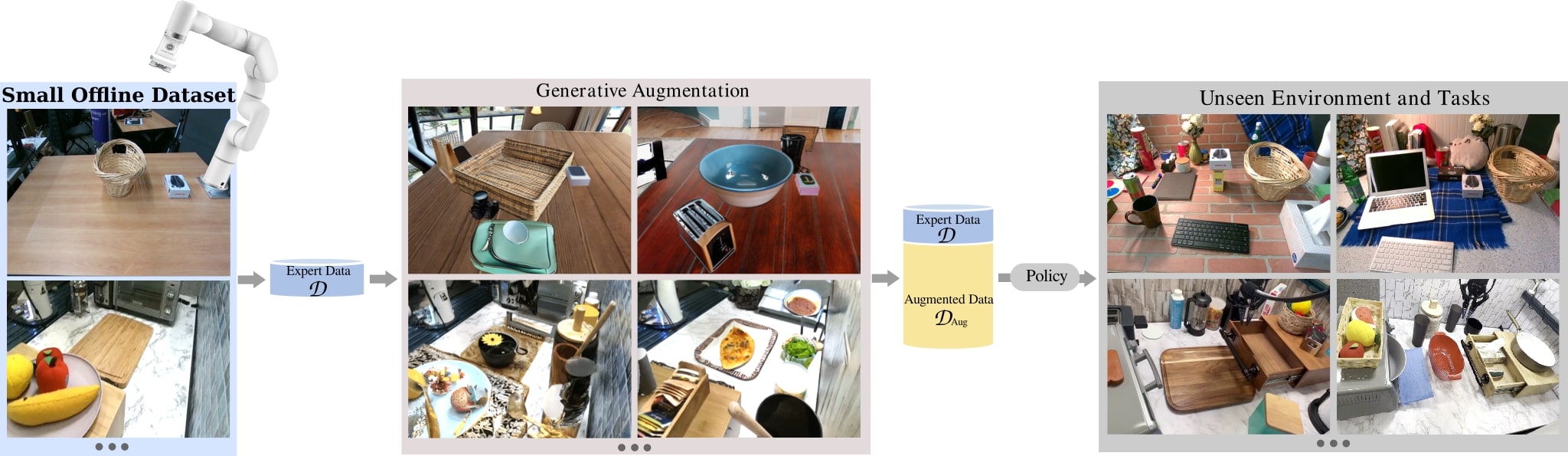 Semantically Controllable Augmentations for Generalizable Robot LearningThe International Journal of Robotics Research (IJRR), 2025
Generative models expand robot training data with controllable changes to objects and scenes, helping learned skills transfer to unfamiliar real-world environments.
-
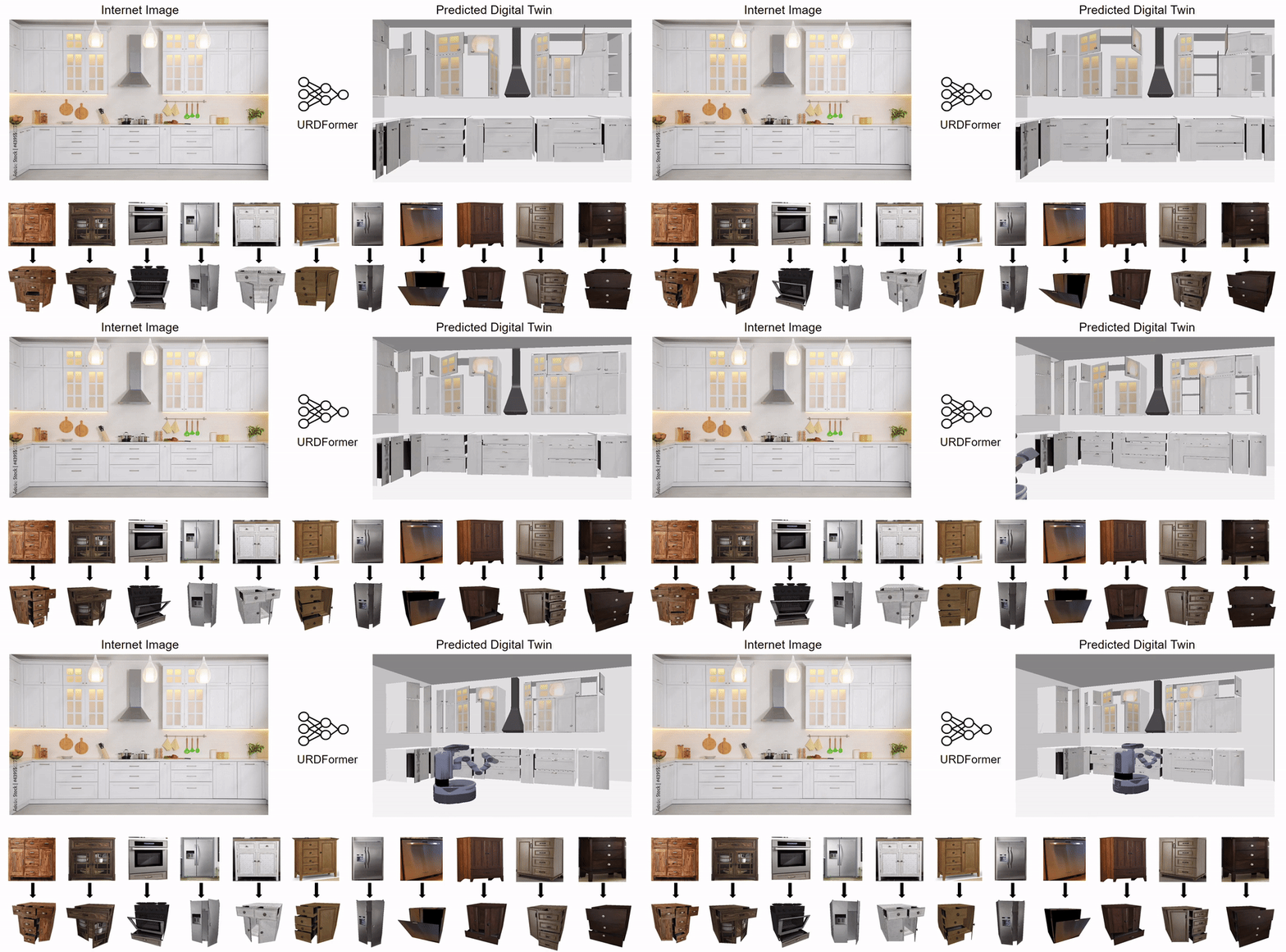 URDFormer: A Pipeline for Constructing Articulated Simulation Environments from Real-World ImagesIn Robotics: Science and Systems (RSS), 2024Oral Presentation at CoRL TGR workshop
URDFormer turns real images into interactive simulation scenes. This makes it easier to create varied environments for training and evaluating robots without building each scene by hand.
-
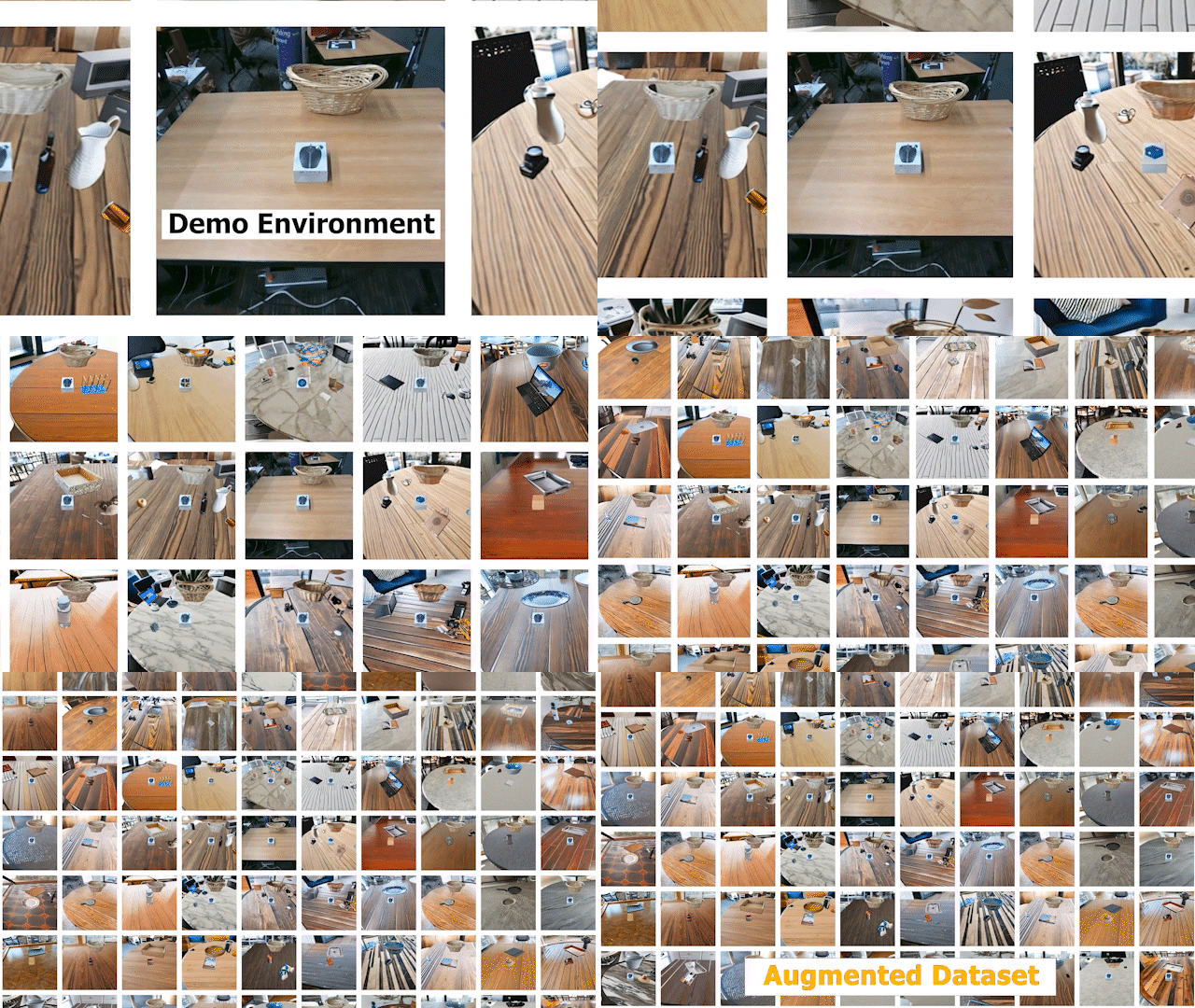 GenAug: Retargeting Behaviors to Unseen Situations via Generative AugmentationIn Robotics: Science and Systems (RSS), 2023Best System Paper Finalist
GenAug uses generative image models to vary the scenes in robot demonstrations, helping robots apply learned skills to new objects and settings with little additional real-world data.
-
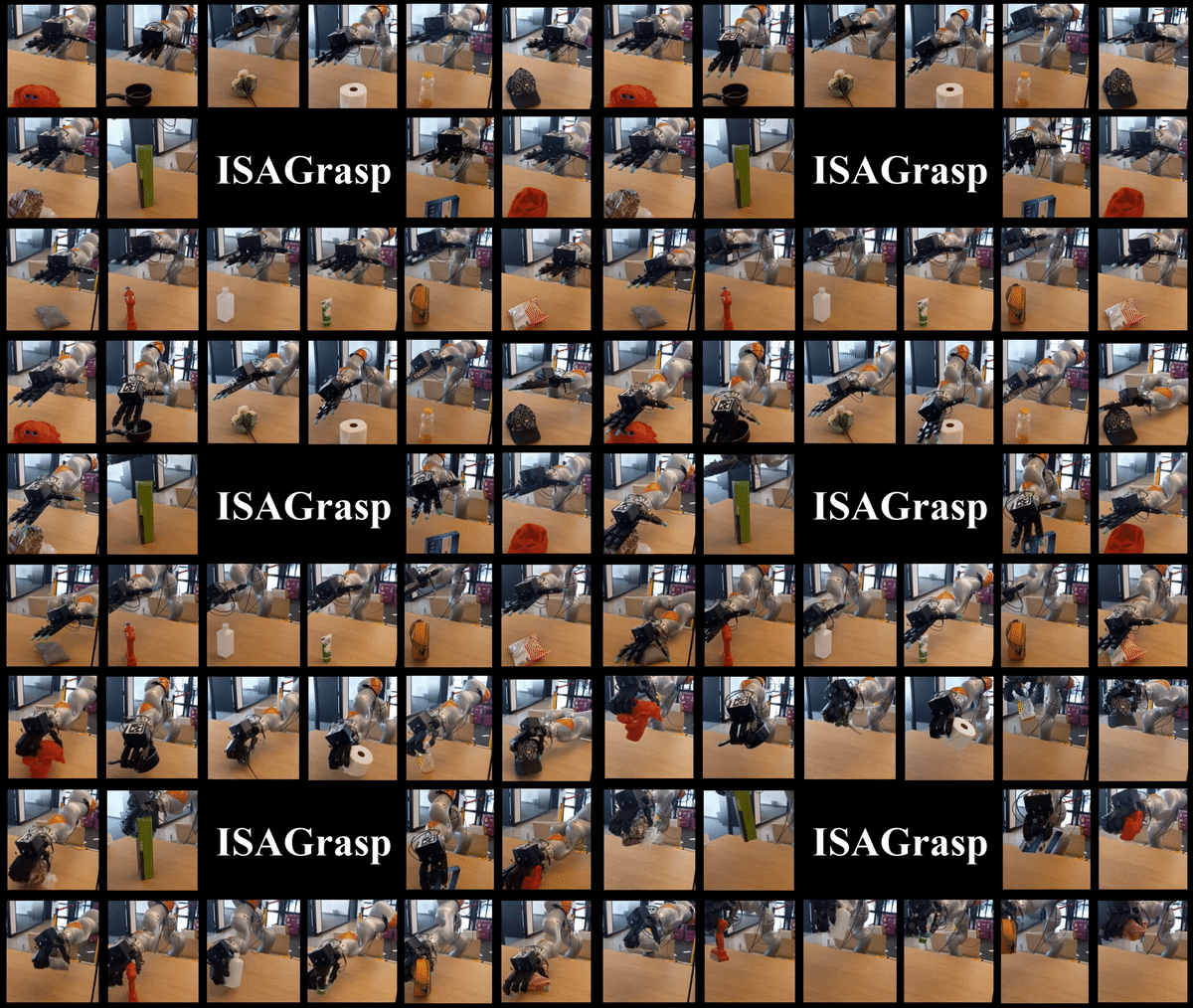 Learning Robust Real-world Dexterous Grasping Policies via Implicit Shape AugmentationIn Conference on Robot Learning (CoRL), 2022
ISAGrasp expands a few human demonstrations into a diverse set of objects and grasps. Policies trained on this data in simulation can grasp unfamiliar objects with a real robot hand.
Talks
Selected invited talks, 2022–2023
- · How to train your robot — guest lecture, Intro to Robotics, University of Minnesota
- · Learning from Imagination — Georgia Tech RoboGrads Student Seminar
- · Learning to generalize with minimum demonstrations — UW Industry Day
- · Training robots with limited demonstrations — Robotics tutorial, UW
- · GenAug — Meta Research EAI Seminar
- · Grasping with minimal human demonstrations — UW CSE Colloquium Robotics Research Showcase
- · ISAGrasp — Industry Affiliates Research Day
- · ISAGrasp — Meta Research EAI Seminar
Earlier projects
- Residual RLCan a better action representation help an RL policy learn from fewer samples?
- Sim2RealAn earlier exploration of generative image translation for simulation-to-real transfer.
- Medical Image AnalysisReconstruction of blood vessels from stereo X-ray images.